Physical Properties
Physical Properties of Metals vs. Plastics
When calculating structural integrity of a machine component, engineers rely on physical properties tables. Tensile strength, flexural strength, modulus of elasticity are neatly tabulated. It is safe to use these values as constants for a typical machine component, as they do not change in a typical application. Metals do not swell in oil or moisture, do not change dimensions approximately from 40 to 200°F, or become brittle when dry. Plastics do.
Most engineers designing with plastics had to learn this fact the hard way. Others still wonder why the part broke, when physical properties tables showed high tensile strength.
As engineers, we are trained to look up physical properties--of metals--in tables. For plastics a physical properties table is nothing more than a snapshot. When the environmental conditions in which the plastic part operates, change, the physical properties change. Hence, when designing with plastic, engineers should request physical properties shown in graphical form, displaying the material's behavior in varying environmental conditions such as in different moisture or temperature ranges.
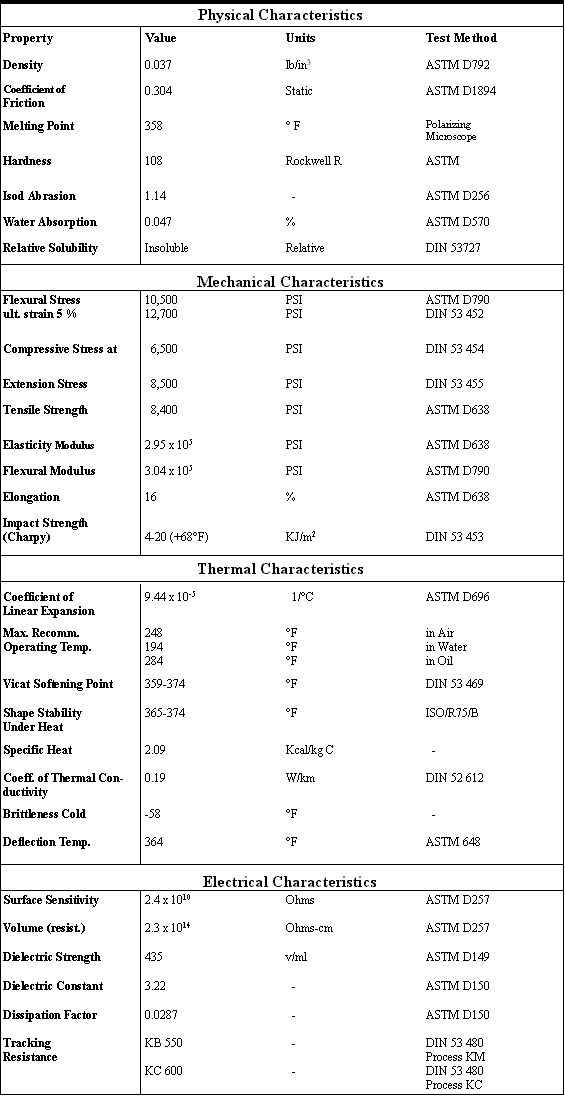
We have complied with the convention and are presenting below a table with physical properties. Keeping in mind that this is only a snapshot in time, we suggest the use of graphs presented on subsequent pages to determine the physical properties of Intech Power-Core™ for specific operating conditions.